Latest News
THE DEAL: Open for Business
Date: 07-Oct-2011
By Richard Collings
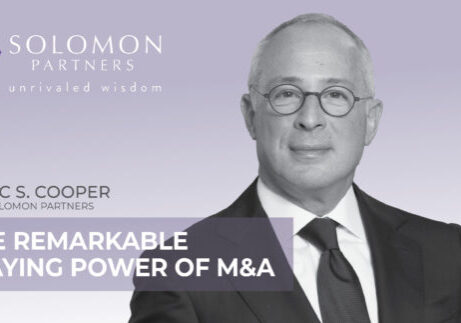
Marc Cooper, a managing director at Peter J. Solomon Co. and head of the firm's retail and apparel practice, sat down with The Deal's Richard Collings to discuss the outlook for retail merger activity for the remainder of the year. Cooper discusses the pressure some investment banks face in winning advisory assignments due to declining M&A activity in the retail space, the current state of dealmaking overseas, the rush to chase growth through acquisitions of e-commerce businesses and the intentions of retailers currently sitting on large piles of cash.
The Deal: Looking at the second half of the year, what do you expect in terms of deal activity?
Cooper: It depends. One of the issues is what is happening with the financing markets and the recent downturn, which was pretty considerable and is pretty considerable and the [lack of] availability of debt financing, I think will impact the financial buyers. As it relates to the strategic buyers in our world, in the retail world, they're still very active and their issue is just about finding the right companies.
A lot of executives I've talked to have said, looking at the second half of the year, they have these tremendous piles of cash, but they're kind of cautious and they are a little bit concerned, and they've talked about just sitting on that cash. What kind of response have you gotten?
I haven't seen that. Coming out of the 2008 recession, what we saw was many of our clients retrenched, focused on best practices, cost cutting, thought much more deeply about how much growth they truly had in their business, and most of them found out they had less growth than they thought, so they cut back on new store openings, cut back on growth in product distribution, and interestingly, when you cut expenses, you focus on best practices and you stop store growth, you generate a lot of cash.
They came out of the recession actually doing great. Both from a profitability standpoint and from a sales standpoint, business is pretty good. The issue, though, is they're public and they have limited growth, and everyone knows it, and so that's not the kind of profile you want for a public company and so now what they are looking for is that next leg of growth in terms of acquisitions, which to retailers is generally foreign but for a few who have done it in the past.
So the only issue they have is finding great deals. And people have. Recently we advised Chico's in purchasing Boston Proper, which is a great business; we advised Decker's; Uggs, in buying Sanuk, a great new brand; PPR in buying Volcom. When they find those they'll go after them in an aggressive way and they'll pay the price that's appropriate to clear. But they're also mindful of having appropriate cash, they won't over lever, and so when we think about acquisition programs on behalf of our clients we do think about "OK, how much can you spend and still have that cushion in the bank?"
So retailers need to put that cash to work to continue to grow their businesses, is that what you're saying? Domestic growth is somewhat stagnant so acquisitions are a way of continuing to ensure there's going to be future business?
The stagnation of growth comes in two forms. One is there is a natural end to a retailer's growth in terms of number of stores. And many of these retailers who started five, 10, 15 years ago are reaching that saturation point? And as we know those incremental stores and when they push to marginal locations, they're going to be less profitable from a return on equity perspective.
The second issue is the consumer. Is the consumer aggressively buying? The answer is the consumer we're seeing has been so far fine. If you have a good product offering, if you've got something that resonates with the buying universe, you will sell. There are the haves and have-nots, and I won't name them, but we all know who they are. And people are doing extraordinarily well if they have a good offering. On the lower end of the market place, gas prices, the general economy does affect them, so the mass market is a little bit challenged.
Looking at your deal, Boston Proper [Chico's FAS Inc.'s acquired Boston Proper on Aug. 17 for $205 million] highlights activity in the e-commerce sector, and that does seem to be an area that retailers are intensely interested in, in terms of deal activity. Is that going to continue going forward through the second half of the year? We will continue to see a number of deal announcements in that area, do you think?
Whether you see deal announcement by retailers buying Internet companies or online companies, I don't know, because it's a hard transaction. Pure Internet retailers just trade at different valuations than retail companies
and it is very hard to buy something of size and of impact that is in the Internet community.
Having said that, though, the No. 1 focus on any CEO's agenda within retail is the Internet, is being a multidiscipline distribution platform, you have to have that, that's where the growth is. And everyone is thinking about it.
Interestingly, our firm has been sort of at the forefront of that process. We have sort of merged our media and our retail group in a way such that we can advise on many of these interesting … transactions. We advised eBay on acquiring GSI. We advised, recently, Zagat on the transaction with Google, and then Barnes & Noble in their most recent transaction in the pipe with Liberty, so this is a major focus for us.
Many of our clients are asking us to come down and talk about that, talk about the e-commerce issue, and what they can do about it. The challenge is when you look at the acquisitions, sometimes they are out of reach from a multiple standpoint.
Switching gears to looking at overseas or cross-border opportunities that also seems to be an area of interest. What are you seeing in terms of that kind of deal activity through the second half of the year, are retailers still looking at growing in places like Asia and Europe?
The answer is yes. Everyone still believes Asia is an enormous opportunity. It's harder to crack and figuring out the right way to do it whether in a partnership or on your own has been interesting and we're seeing actually and we're advising a number of our clients on unwinding some partnerships in China, which is an interesting issue, and in other countries that are more growth oriented.
As it relates to acquisitions, yes, everyone wants European exposure, and you saw the transaction Genesco bought Schuh Group in the U.K. and then the transaction that Jones did, both highlight an interest to have European exposure.
Are you all concerned about consumer spending and the economic outlook in how it is impacting deal activity? Some investment bankers I have spoken to are kind of disappointed in the level of deal activity so far this year. It's up over last year, but they are little concerned that the level of deal activity right now won't be able to sustain themselves on the amount of business.
It's a good issue. We have found this even earlier in the year. We have seen more broken transactions in the past 12 months than I've seen in my career. And this is not just our own, we've had our fair share, but across the board. Companies that typically would have traded, would have found a level, and would have gotten done, didn't get done.
And interestingly it would have been a function of who is the interested buyer. If it fits within the strategic criteria, the right size, the right growth profile, the right strategic fit, it's going to sell and it's going to sell at a very good price.
It's no secret that Volcom was purchased at a fairly high multiple because you had PPR and VF competing for it. When it goes into the private equity community, and this is even before the financing markets cratered, this is when the financing markets were very aggressive, the financial community, the private equity people, are very conservative.

And we've seen a lot of last-minute conservatism at the end where traditionally they would have jumped in with both feet and found a way to get it done. And so, it's really the financial community being conservative, and maybe it's about living through 2008 and 2009, so they have sort of muscle memory on what happens there and they are not going to put themselves in the same situation. Which I think is fine, because many of these companies who are being sold, they are fine businesses, but then the question is what do you do with them afterwards.
So, I think that's part of the reason that you are seeing the layoffs at the big investment banks, because, keep in mind their most lucrative transactions come from private equity deals, because you have the financing piece as well as the M&A piece. And they're not as aggressive as you would have thought given the amounts of capital they have on the sidelines.

©Copyright 2011, The Deal, LLC. All rights reserved.